As an Amazon Associate, I earn from qualifying purchases. This post may contain affiliate links, meaning I get a commission if you decide to make a purchase through my links, at no cost to you.
Welcome to April 2026, folks. Spring camping season is officially here.
If you live anywhere near the coast or tornado alley, you’re probably already side-eyeing your emergency bins, too.
Let’s address the elephant in the outdoor tech space: most cheap “solar chargers” dominating Amazon are basically just heavy, expensive bricks with useless gimmicks attached.
If you’re trying to build a reliable off-grid kit, you’ve probably narrowed your search down to the two heavyweights. The blavor vs mregb debate is absolutely everywhere in the prepping and hiking communities right now.
I’ve spent the last few months dragging both of these batteries through mud, leaving them in freezing overnight tents, and testing their actual limits.
Here’s what it really feels like to use them when you’re miles away from a wall outlet.
The 10-Second TL;DR
In a rush? Here is all you need to know:
If you want a rugged, lightweight daily carry for your backpack, grab the BLAVOR 10,000mAh.
If you are prepping for a multi-day blackout and don’t care about the extra weight, the Mregb 42800mAh is the absolute tank you want sitting on your kitchen counter.
Quick Comparison
| Feature / Quirk | BLAVOR 10,000mAh | Mregb 42800mAh |
|---|---|---|
| The Vibe | Sleek, grippy, hiker-friendly | Massive, heavy, unapologetic tank |
| Weight | ~9.3 oz (Barely notice it) | ~1.1 lbs (You will feel this) |
| Killer Feature | Qi Wireless Charging (Lifesaver) | Absurd capacity & blinding flashlight |
| Air Travel | ✅ TSA Approved (37Wh) | ⚠️ Needs Airline Permission (158Wh) |
| Check Price | 👉Check Current Price & Deals on Amazon | 👉Check Current Price & Deals on Amazon |
1.BLAVOR 10,000mAh: The Hiker’s Best Friend
I used to lug around massive battery banks on day hikes until I realized I was just punishing my knees for no reason.
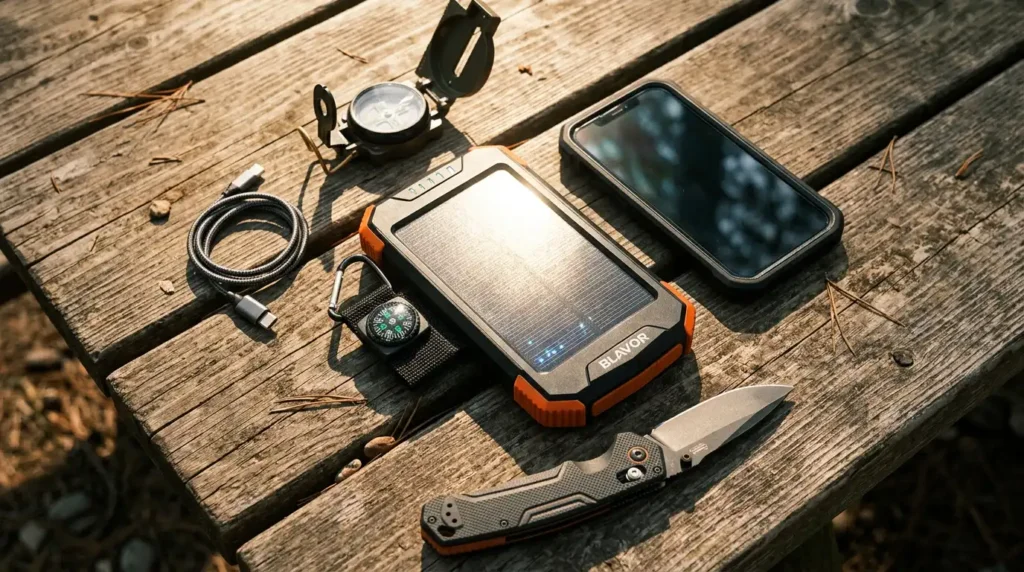
The BLAVOR hits that sweet spot. You get plenty of juice, but it’s physically not much bigger than a standard iPhone wrapped in a thick case.
The first thing you notice when you hold it is the texture. It’s wrapped in this thick, rubberized armor that just feels inherently grippy.
A couple of weeks ago, I fumbled it while trying to snap a photo near a waterfall. It bounced right off a jagged piece of gravel. Not a single dent on the corners.
But what actually saved my bacon on that trip was the wireless charging pad.
We had been trekking through some serious mud. When I went to plug my phone in at lunch, I realized my phone’s charging port was packed with damp dirt. Normally, that’s a disaster.
With the BLAVOR, I just clicked the power button, laid my phone flat on the power bank’s back, and the Qi charging immediately kicked in.
No cables. No cleaning out ports with a toothpick in the woods. Just instant power.
But here is the reality check: the solar panel on the BLAVOR is tiny. You cannot leave this on a rock for three hours and expect a full battery. It’s there to provide an emergency trickle charge, giving you just enough juice to make a 911 call if you are completely stranded.
👉 Check Current Price & Deals on Amazon
2.Mregb 42800mAh: The Doomsday Brick
If the BLAVOR is a nimble sports car, the Mregb is a military transport vehicle.
When I finally pulled this out of the Amazon box, I actually laughed. It is unapologetically chunky. There is no sleek, modern design here—it’s just raw, heavy-duty utility.
I bought this specifically as a “house power” backup. When the grid goes down for 48 hours because a spring storm took out the local substation, this is what I want.
During a recent weekend test, I used it to charge my iPhone, my wife’s Android, my Garmin watch, and a kid’s tablet. It handled all of it, and the battery indicator barely flinched.
The build quality is aggressive. To get that IP67 waterproof rating, the rubber flaps over the USB ports are incredibly snug.
You actually have to push quite hard to seat your charging cables. It’s mildly annoying at first, but it gives you total peace of mind that a spilled water bottle or a rainstorm isn’t going to short the thing out.
Plus, the built-in LED flashlight on the back is genuinely blinding—way better than trying to navigate a dark house with your phone’s weak flash.
But you have to know what you are signing up for. It weighs over a pound. It will drag your backpack down.
More importantly, you cannot just toss this in your carry-on luggage.
According to the official FAA PackSafe regulations for lithium batteries, passengers are limited to unapproved batteries of 100 Watt-hours (Wh) or less.
The Mregb sits at roughly 158Wh. You legally have to ask your airline for permission before you fly with it. If you’re a frequent flyer, this is a massive headache.
👉Check Current Price & Deals on Amazon
The Off-Grid Secret Nobody Tells You
Here is the frustrating truth about both of these devices: relying solely on their built-in solar panels will drive you insane.
Because the surface area on both banks is so small, fully charging them via the sun takes days, if not weeks.
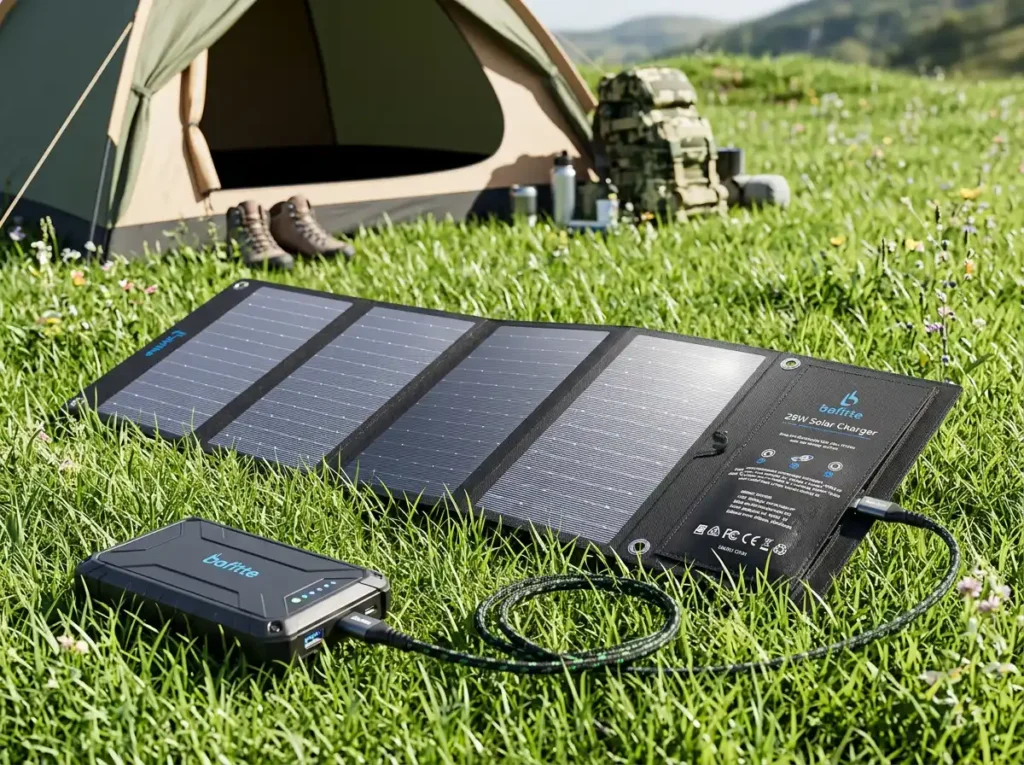
If you are actually prepping for a long-term outage or an extended camping trip, you have to separate your battery from your solar collector. You need a dedicated, foldable panel.
My daily driver? I use either of these power banks, but I always pair them with the BigBlue 28W Portable Solar Charger.
When I get to a campsite, I unfold the BigBlue over my tent. It has a massive surface area of high-efficiency SunPower panels. I plug the Blavor or Mregb directly into it.
The BigBlue acts as the engine generating the electricity. The power bank acts as the gas tank safely storing it. It changes the entire game.
👉 Check Current Price & Deals on Amazon
Which Persona Fits Your Lifestyle?
When it comes to the final blavor vs mregb decision, don’t look at the specs. Look at your daily habits.
🎒 The Weekend Minimalist: You commute daily and do light weekend hikes. You count ounces in your backpack. You just want a rugged safety net that can wirelessly charge your phone when a cable breaks.
(Go with the BLAVOR 10,000mAh)
🌪️ The Hurricane Prepper: You are building a serious emergency bin for your house. You want enough raw capacity to keep a family of four connected during a 3-day blackout, and you don’t care how heavy it is.
(Go with the Mregb 42800mAh)
☀️ The True Off-Grid Camper: You actually plan to stay in the woods for a week and need to constantly generate new power.
(You need a foldable panel like the BigBlue 28W paired with either battery)
Questions My Neighbors Keep Asking Me
Can these solar power banks actually fully charge themselves in the sun?
Practically speaking, no. It takes roughly 40 to 50 hours of unshaded, direct sunlight to fully charge a 10,000mAh battery using a built-in panel. Think of it as a last-resort trickle charger to keep a dying phone alive, not your primary wall-outlet replacement.
Can I take the massive Mregb 42800mAh on an airplane?
You legally must get airline approval before taking it on a plane. Because the Mregb operates at approximately 158Wh, it exceeds the FAA’s standard 100Wh limit. If you want a hassle-free airport experience, take the 37Wh Blavor instead.
Will leaving my power bank baking in the sun damage it?
Yes! This is a super common mistake. According to battery safety experts, extreme heat permanently degrades lithium-ion cells. People leave their power bank on the dashboard of a hot car in July to “charge” and end up ruining it. If you are using the sun, try to angle the panel upward, but keep the battery body itself propped up in a cross-breeze so it doesn’t cook.
My Final Recommendation: If I Could Only Keep One…
If a tornado blew through my town tomorrow morning and I could only grab one piece of gear on my way out the door, I’d grab the Mregb 42800mAh.
It’s heavy, and I hate dealing with it at the airport. But in a true, terrifying emergency, capacity is king. I want the absolute peace of mind knowing I have nearly a week of phone battery sitting right in my hand.
That said, for 90% of my normal life—commuting, going to the gym, or taking my dog on a trail—the BLAVOR 10,000mAh is the one actually sitting in my backpack right now.
👉 Check the Current Live Price & Active Coupons for BLAVOR on Amazon
👉 Check the Current Live Price & Active Coupons for Mregb on Amazon
Got a favorite off-grid setup or a survival trick you swear by? Drop a comment down below or tag me in your campsite photos—and as always, stay safe out there!
Want more recommendations? Head back to our homepage to see all our 2026 everyday picks.