As an Amazon Associate, I earn from qualifying purchases. This post may contain affiliate links, meaning I get a commission if you decide to make a purchase through my links, at no cost to you.
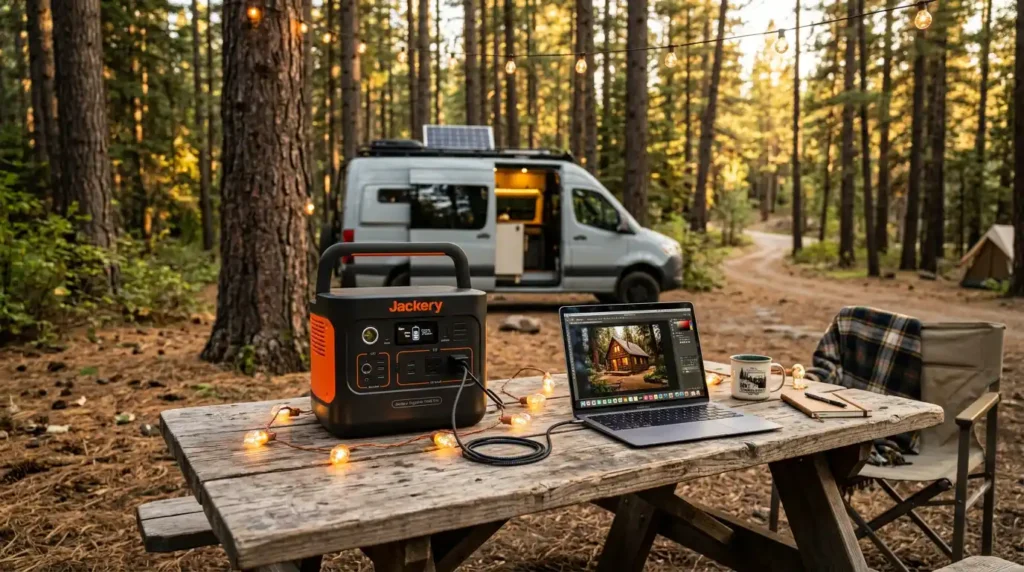
Let’s be honest: boondocking in the middle of a National Forest is all fun and games until your drone dies, your phone hits 5%, and the meat in your portable fridge starts getting warm. That’s exactly why choosing the right setup is crucial, and in this Jackery Explorer 1000 v2 vs EcoFlow DELTA 2 review, we’ll help you find the perfect solution.
We’re deep into the summer camping season right now, and the days of dragging a loud, gas-guzzling generator into the pristine wilderness are pretty much over. Aside from the smell and the sheer hassle of hauling extra fuel, the National Park Service has strict regulations on generator noise and usage hours. If you fire up a gas generator at 9 PM to watch a movie in your RV, your camp neighbors are going to hate you. That’s exactly why high-capacity lithium solar generators have completely taken over the campground.
Whether you’re trying to work remotely from your van, keeping a CPAP machine running off-grid, or just making sure your camera gear survives a long weekend in the desert, you need a serious portable power station.
But with price tags hovering right around the $1,000 mark, you can’t really afford to buy the wrong one. After dragging these units through dust, mud, and endless road trips over the last few years, the choice for a mid-sized off-grid power setup really comes down to two heavyweights. Here is exactly which one you should trust your gear to in the battle of the Jackery Explorer 1000 v2 vs EcoFlow DELTA 2, based on how you actually camp.
The 1000Wh Sweet Spot: Jackery Explorer 1000 v2 vs EcoFlow DELTA 2
Before I get into the weeds of my field testing, here is a quick breakdown. People who invest in a 1000Wh power station rarely regret it, but the debate usually centers around charging speeds and whether or not you can expand the system later. It’s worth noting that both models below have finally transitioned to LiFePO4 (Lithium Iron Phosphate) batteries. This is a massive deal for 2026—it means they can handle over 3,000 to 4,000 charge cycles before the battery degrades. You’re essentially buying a power bank that will last a decade of daily use.
| Feature | Jackery Explorer 1000 v2 | EcoFlow DELTA 2 |
|---|---|---|
| Best Vibe | Rugged, simple, grab-and-go | High-tech, vanlife, rapid charging |
| Battery Capacity | 1070Wh | 1024Wh (Expandable) |
| Output (AC) | 1500W (3000W Surge) | 1800W (2700W Surge) |
| Charge Time (Wall) | ~1.6 Hours | ~80 Minutes (0-80% in 50 mins) |
| Weight | 23.8 lbs | 27 lbs |
The Bulletproof Classic: Jackery Explorer 1000 v2
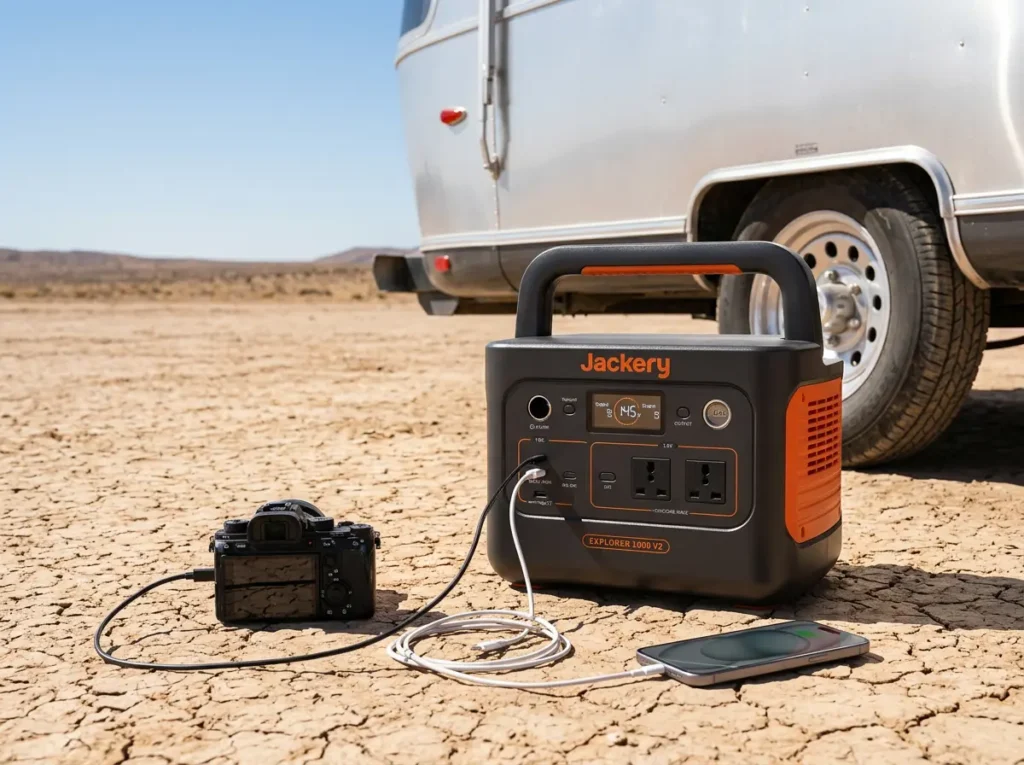
I’ve always called Jackery the Toyota Tacoma of power stations. Other brands might brag about flashier specs on paper, but when I’m out in the dirt, I just want something that turns on and keeps my food cold without making me jump through hoops. That’s exactly what the Explorer 1000 v2 delivers.
I took this unit out to BLM land in Utah a few weeks ago. If you’ve ever camped out there, you know the fine red dust gets into absolutely everything. Despite the harsh conditions, the Jackery didn’t skip a beat. During a morning work session at my folding table, I had my MacBook Pro, a Starlink dish, and my Dometic portable fridge all pulling power simultaneously. The 1500W output handled it effortlessly, and I was genuinely surprised by how quiet the internal cooling fans were—a huge quality-of-life upgrade from their older iterations.
It’s the perfect rig for the weekend warrior or the family camper because of its sheer simplicity. You plug things in, press a button, and it works. At under 24 pounds, it’s also incredibly compact. The folding handle means it slides right into tight RV storage bays or the trunk of a sedan without awkwardly taking up vertical space.
It’s not entirely perfect, though. If you are someone who loves smart home tech, you might find Jackery’s companion app a bit basic compared to the competition. Furthermore, it operates as a closed system. What you buy is what you get; you cannot daisy-chain extra batteries to it if your power needs grow next year. But for someone who just wants rugged, reliable power they don’t have to think about, it’s incredibly hard to beat.
Check Current Price & Deals on Amazon
The Tech-Lover’s Dream: EcoFlow DELTA 2
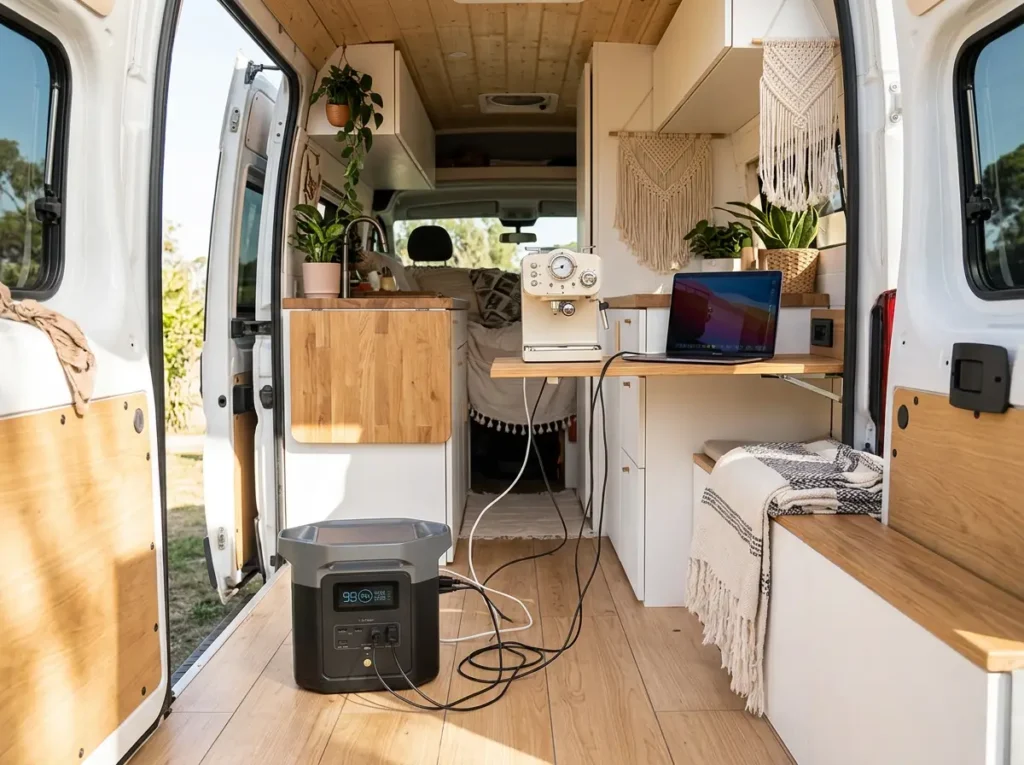
On the flip side, if you are living out of your van full-time or running a heavy digital nomad setup, your priorities shift entirely. For this crowd, the EcoFlow DELTA 2 is in a league of its own.
Last fall, I found myself parked in a heavily shaded Oregon forest for three days. With zero solar gain through the trees, my house batteries eventually went completely flat. I drove into a nearby town, lugged the DELTA 2 into a diner, plugged it into an empty wall outlet by my booth, and ordered breakfast. Thanks to EcoFlow’s X-Stream fast-charging tech, this unit went from 0% to 80% before I even finished my coffee—about 50 minutes. If you live on the road, time spent waiting for batteries to charge is wasted time, and EcoFlow completely solves that.
The output on this machine is also wild. It pushes 1800 watts continuously, which means you can actually run an induction cooktop, a hair dryer, or an electric kettle. Those are high-draw appliances that usually trip the overload sensors on other 1000Wh stations, leaving you with a half-cooked meal.
I also love the expandability. For anyone building a long-term van build, the ability to buy the main unit now and easily plug in an extra EcoFlow smart battery next year to double your capacity is an incredibly smart financial move.
The trade-offs? All that rapid charging generates heat. When pulling maximum wattage from a wall outlet, the DELTA 2’s fans get noticeably loud—you definitely won’t want it sitting right next to your head while it charges. Also, because of the sleek, curved top design, you can’t stack your duffel bags or camping gear on top of it when packing the car, which can be slightly annoying in a cramped vehicle.
Check Current Price & Deals on Amazon
The Perfect Companion: Free Power from the Sun
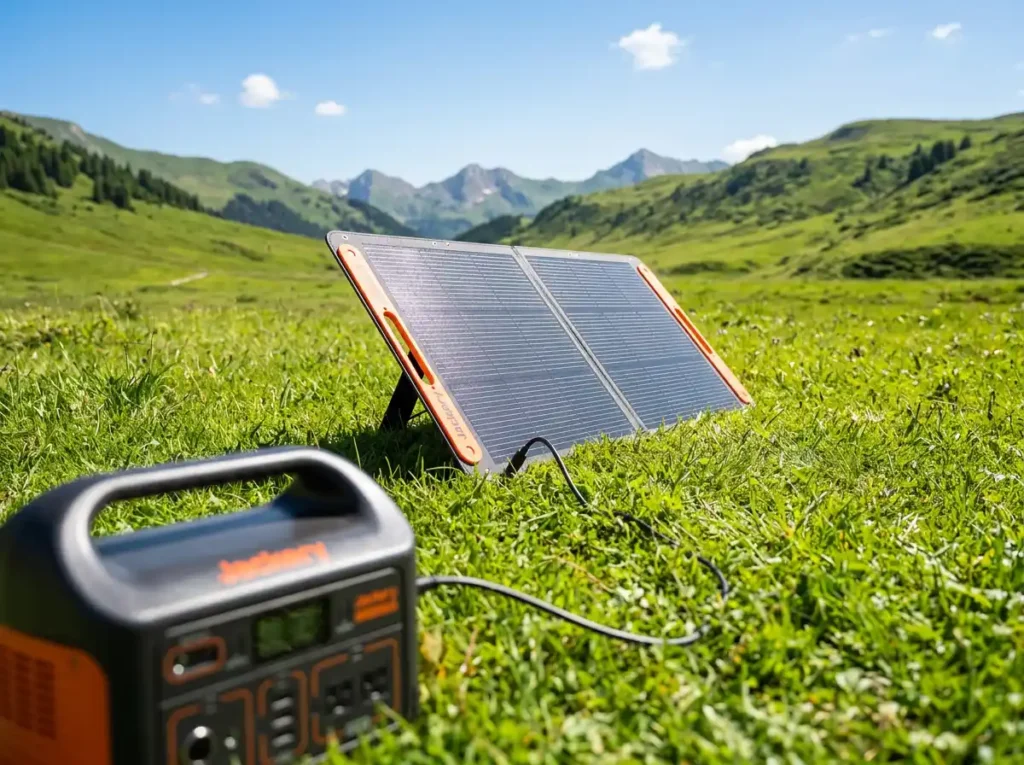
You can’t really call it a true off-grid setup if you inevitably have to drive back to civilization to plug into a wall outlet. A power station is just a big battery; pairing it with a solar panel turns it into a self-sustaining loop.
If you end up pulling the trigger on the Jackery (or the EcoFlow, which also accepts standard solar inputs), do yourself a favor and get a high-quality portable panel. The math is pretty unforgiving: if you are running a 12V portable fridge and keeping two laptops charged daily, a 1000Wh battery is going to be tapped out in about 48 hours.
I’ve been using the SolarSaga 100W for a while now. I gravitate toward it because it weighs under 10 pounds and features built-in kickstands. When the afternoon sun shifts, picking it up and re-angling it takes two seconds.
One of my favorite hidden features on the SolarSaga is that it actually has built-in USB-A and USB-C ports right on the panel’s zippered pouch. If your main power station is already fully charged, or you just want to top off your iPhone while lounging in your camp chair, you can bypass the big battery entirely and plug your phone directly into the solar panel. It’s incredibly convenient.
Check Current Price & Deals on Amazon
Answering Your Biggest Off-Grid Power Questions
Before I built out my rig, I spent weeks digging through Reddit threads comparing the Jackery Explorer 1000 v2 vs EcoFlow DELTA 2 trying to figure out what these machines could actually do. Here are the genuine answers to the most common questions I get asked on the trail.
Q:Can one of these run a CPAP machine all night?
A:Absolutely. Both the Jackery 1000 v2 and EcoFlow DELTA 2 will easily run a standard CPAP machine for 3 to 5 nights on a single charge. However, there is a major catch. You need to turn off your CPAP’s humidifier and heated hose features, as those pull massive amounts of power. More importantly, buy a 12V DC car-port adapter for your specific CPAP model. If you plug the standard AC wall plug into the power station, the station’s internal inverter has to run all night, which drains your battery about 20% faster just from the energy conversion loss.
Q:Can I charge the power station with solar panels WHILE it’s powering my camp fridge?
A:Yes, this is called pass-through charging, and both of these modern units handle it perfectly. I do this every single day when I’m parked. I leave the solar panels plugged into the battery input, and my 12V fridge plugged into the output. The sun powers the fridge in real-time, and any excess solar energy flows directly into the battery so the fridge stays cold overnight.
Q:Will a 1000W power station jump-start a dead car battery?
A:Not directly. These lithium stations do not have the instant high-amperage output (Cold Cranking Amps) required to turn over a heavy starter motor, so you can’t just clamp jumper cables straight to them. However, they can absolutely save you. You just plug a standard 12V battery trickle charger into the AC outlet of the power station, hook that up to your dead car battery, and wait about 45 minutes to give the car battery enough juice to start. It has literally saved me from a massive towing bill in the desert.
Upgrading your camp power setup totally changes how long you can comfortably stay outdoors. Whether you prioritize the rugged, throw-it-in-the-truck reliability of the Jackery or the rapid-charging, high-tech ecosystem of the EcoFlow, you really can’t go wrong.
Stop stressing about your devices dying, get your setup dialed in, and get back out into the woods. Drop a comment below and let me know what gear you’re powering on your next road trip!
Still deciding on the Jackery Explorer 1000 v2 vs EcoFlow DELTA 2? Want more gear recommendations? Head back to our homepage to see all our 2026 tech comparisons.