As an Amazon Associate, I earn from qualifying purchases. This post may contain affiliate links, meaning I get a commission if you decide to make a purchase through my links, at no cost to you.
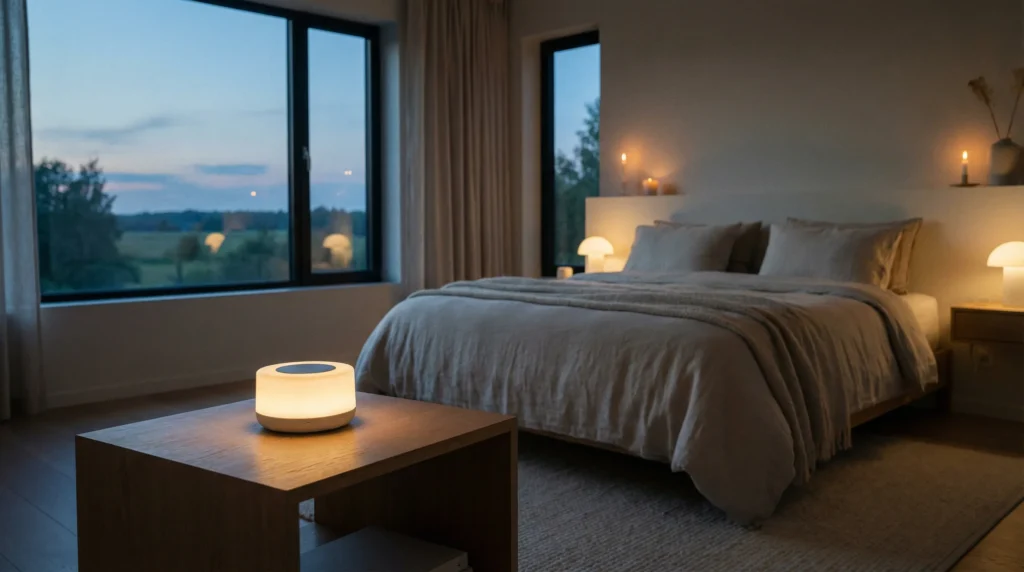
Finding the best white noise machines for light sleepers is usually a journey born out of pure frustration.
Every spring and fall when the clocks shift, your internal circadian rhythm gets scrambled.
For sensitive sleepers, the real issue is rarely total silence. The enemy is the sudden contrast.
When a bedroom is dead quiet, a neighbor closing a car door outside sounds like a sharp crack.
Your brain latches onto that sudden spike in decibels, instantly pulling you out of slow-wave sleep.
The solution is not blasting harsh, static hiss directly at your ears.
It is about creating a stable acoustic floor that absorbs household clatter before your nervous system can register it.
The Best White Noise Machines for Light Sleepers Compared
| Product | Sound Engine & Primary Fix | Pricing & Real-Time Availability |
|---|---|---|
| Hatch Restore 3 | Digital multi-track audio + 20 circadian lights. Combines noise masking with a gradual dawn alarm to reset your internal clock. | View on Amazon |
| Yogasleep Dohm Classic | Real internal dual-speed acoustic fan. Natural, continuous rushing air that eliminates digital looping fatigue entirely. | View on Amazon |
| Dreamegg D1 | 24 non-looping digital tracks. Packs strong volume and seamless playback to block sudden street noise and snoring. | View on Amazon |
1. Hatch Restore 3: The Circadian Anchor for Morning Light Sensitivity
If your sleep schedule unravels the minute the seasons change, audio masking is only half your battle.
Light is what actually governs your internal clock. That specific intersection is where the Hatch Restore 3 operates.
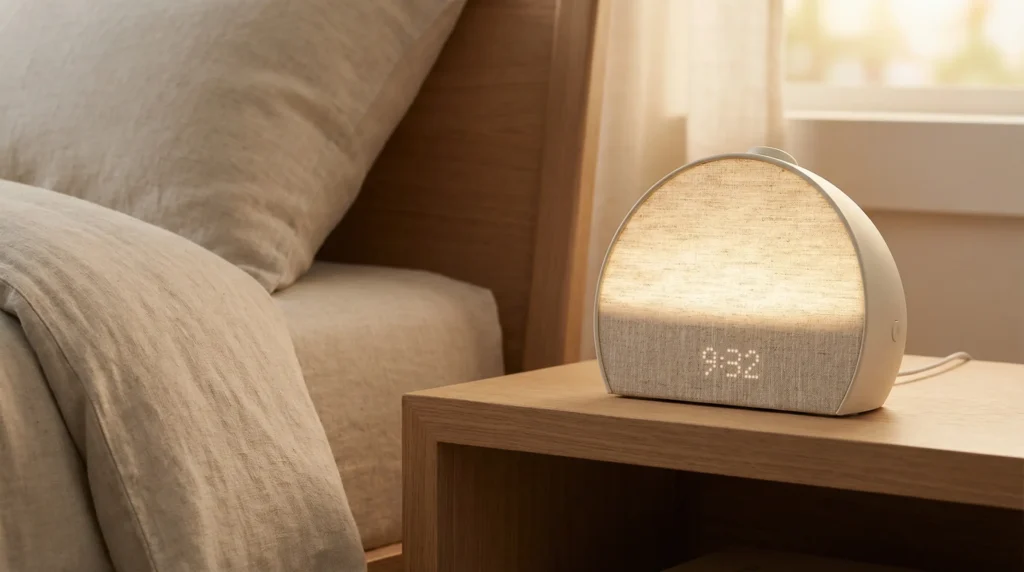
Instead of looking like a sterile plastic speaker, it resembles a soft, linen-wrapped bedside sculpture.
The digital clock shines gently through the fabric face, keeping harsh LED glare out of your direct line of sight.
Hatch updated the Restore 3 to reduce phone reliance at bedtime.
You can cycle through your multi-step unwind routine and adjust settings directly using tactile top buttons instead of opening a glowing smartphone screen in the dark.
Out of the box, it comes loaded with 40 built-in sleep sounds and 20 circadian light routines.
Come morning, a gradual dawn simulation mimics sunrise to ease you awake before any acoustic alarms sound.
👉View the Hatch Restore 3 and Color Options on Amazon
The trade-off is Hatch’s ongoing content model.
While the baseline sleep sounds and customized alarm schedules work permanently without fees, Hatch actively promotes their Hatch+ monthly subscription for expanded meditations and daily soundscapes.
If you want a strictly offline, non-connected sound generator, this Wi-Fi-dependent system will feel like overkill.
2. Yogasleep Dohm Classic: Pure Acoustic Air for Loop-Sensitive Ears
If you have ever lain awake anticipating the exact millisecond a digital audio track repeats, your brain will appreciate the Yogasleep Dohm Classic.
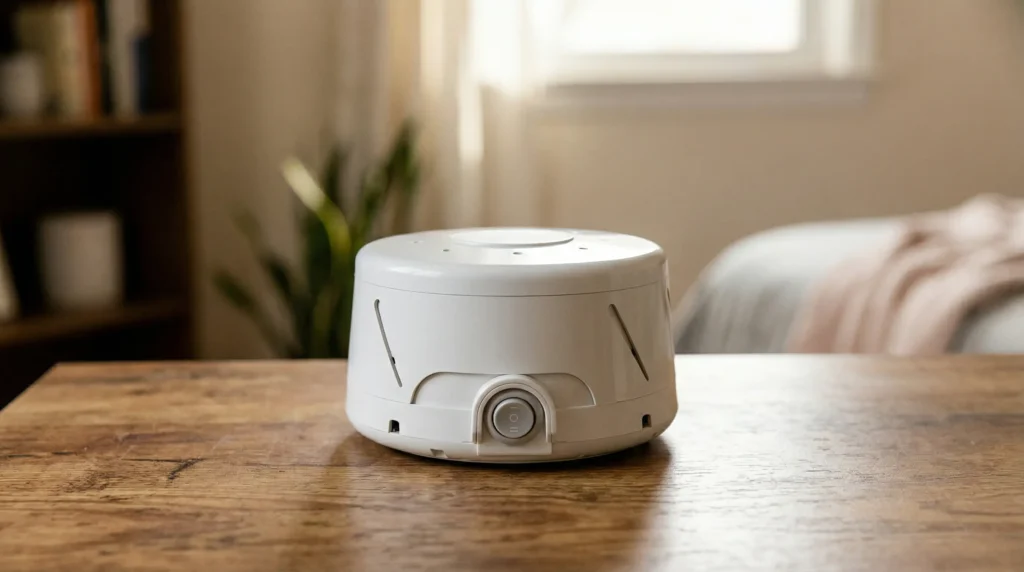
First engineered back in 1962, the Dohm uses zero microchips, no flash memory, and no speaker drivers.
Inside the domed housing sits an electric motor spinning an asymmetrical fan blade.
It generates the physical sound of rushing air without blowing an unwanted draft across your bed.
Adjusting the tone is completely mechanical.
You grip the exterior collar with one hand and twist the housing with the other to open or close the internal vents.
That physical twist alters the tone from a low-frequency hum to an open, breezy rush.
👉 Check Today’s Price for the Yogasleep Dohm Classic on Amazon
The catch here is total analog simplicity.
You get no companion app, no battery backup, and no auto-shutoff timer.
You flip the rocker switch on when you crawl into bed, and you flip it off when you wake up.
For light sleepers who find digital audio artificial, the Dohm’s organic sound profile blends household noise away without fatiguing your ears.
3. Dreamegg D1: High-Decibel Value for Travel and Thin Apartment Walls
For anyone dealing with loud hallway footsteps, shared apartment walls, or a snoring partner, the Dreamegg D1 provides serious sound masking in a compact footprint.
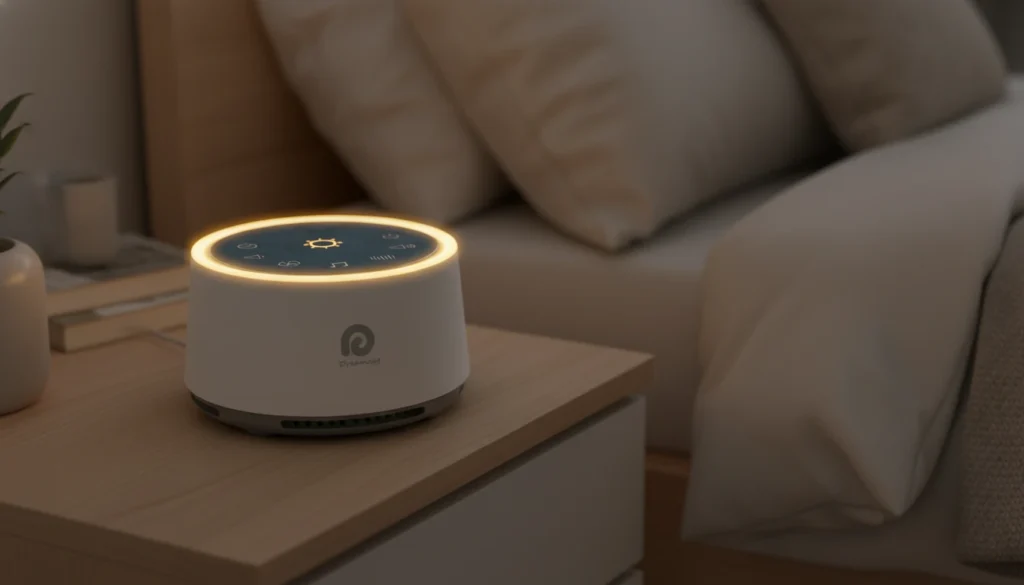
The unit is roughly the size of a flattened hockey puck, wrapped in smooth matte ABS plastic.
A thick rubber base ring keeps it securely planted on sleek nightstands without sliding around.
Its raised, widely spaced buttons make it easy to adjust volume or switch sounds by touch alone in a dark room.
Internally, the D1 carries 24 distinct sounds categorized into fan rumbles, classic white and pink noises, and nature tracks.
Unlike budget travel units that play short, compressed audio files, the D1’s digital sound chip loops tracks without micro-dropouts.
👉 Check Dreamegg D1 Latest Pricing & Ratings on Amazon
Keep in mind that the warm LED nightlight ring on top cannot be dialed down to an ultra-faint glow.
While it works great for navigating a dark room without stubbing your toe, total-darkness purists will want to tap the dedicated top button to shut the light ring completely off.
The Secret Companion: Pairing Your Machine with the MAXTID Under Door Draft Stopper
Even the most capable sound machine will struggle if your bedroom has an open acoustic channel running along the floorboards.
The gap beneath your bedroom door acts like an untreated sound leak.
Hallway footsteps, kitchen clatter, and late-night TV audio slip right under the door frame and travel straight to your pillow.
Sliding a MAXTID Under Door Draft Stopper along the bottom of your door solves this instantly.
👉 Check MAXTID Under Door Draft Stopper Sizes on Amazon
Its dual-sided foam cylinders hug the bottom of the door, physically sealing that 1- to 1.5-inch void.
That physical barrier stops incoming sound waves from bouncing across hard floors into your room.
Once that gap is sealed, your sound machine doesn’t have to battle at maximum volume.
You can run your ambient background noise at a lower, healthier level and still enjoy far better bedroom isolation.
Safe Decibel Levels and Optimal Bedroom Placement
A common mistake for light sleepers is placing their machine on the headboard, just inches away from their ears.
That setup causes auditory fatigue rather than genuine comfort.
Your sound machine works best as an acoustic shield placed between your ears and the noise source.
Position it beside the bedroom door or on a dresser beneath a window facing the street.
Keeping it 4 to 6 feet away from your head allows the sound waves to disperse evenly across the bedroom.
Keeping the output safe is just as vital as masking outside noise.
Both the CDC/NIOSH Noise Safety Guidelines and pediatric sleep research from the American Academy of Pediatrics advise keeping continuous bedroom background sound between 50 and 60 decibels at the ear.
A practical rule of thumb: if you have to raise your voice to hold a normal conversation across your bed, your machine is running too loud.
Common Sound Machine Questions for Restless Sleepers
Which sound profile masks sudden household noises best: white, pink, or brown noise?
White noise spreads audio energy equally across all frequencies, creating a sharp hiss similar to television static.
Pink and brown noise shift their acoustic weight into deeper, lower-frequency ranges.
Because common household noises—like door clicks, footsteps, and distant engines—are low-frequency rumbles, deeper pink and brown profiles absorb those audio spikes without irritating your ears.
Will running an analog machine like the Dohm impact my monthly electric bill?
The Dohm Classic draws around 18 watts of electricity on its high-speed setting.
Leaving it running eight hours every night consumes roughly 4 to 5 kilowatt-hours per month.
At typical residential power rates in the United States, that translates to less than a single dollar added to your monthly bill.
Should I use the auto-off timer or let the machine run all night?
Light sleepers should almost always leave the machine running continuously until morning.
When an automatic timer cuts the sound mid-cycle, the sudden plunge back into total silence often triggers an acoustic wake-up reflex.
Your brain notices the sudden absence of sound, pulling you out of deep sleep right as your room goes quiet.
Final Thoughts on Reclaiming Rest
Investing in the best white noise machines for light sleepers is not about buying silence—it is about securing predictable, unbroken sleep.
If you prefer an analog device with zero microchips and genuine air movement, pick up the Yogasleep Dohm Classic on Amazon for unbeatable mechanical reliability.
If your morning routine needs an overhaul and you want sunrise dawn simulation with physical bedtime controls, the Hatch Restore 3 on Amazon is the premier aesthetic choice for modern nightstands.
And if you need an affordable, travel-ready workhorse that controls errant decibels reliably, grab the Dreamegg D1 on Amazon to protect your sleep without spending a fortune.
Want more recommendations? Head back to our homepage to see all our 2026 everyday picks.