As an Amazon Associate, I earn from qualifying purchases. This post may contain affiliate links, meaning I get a commission if you decide to make a purchase through my links, at no cost to you.
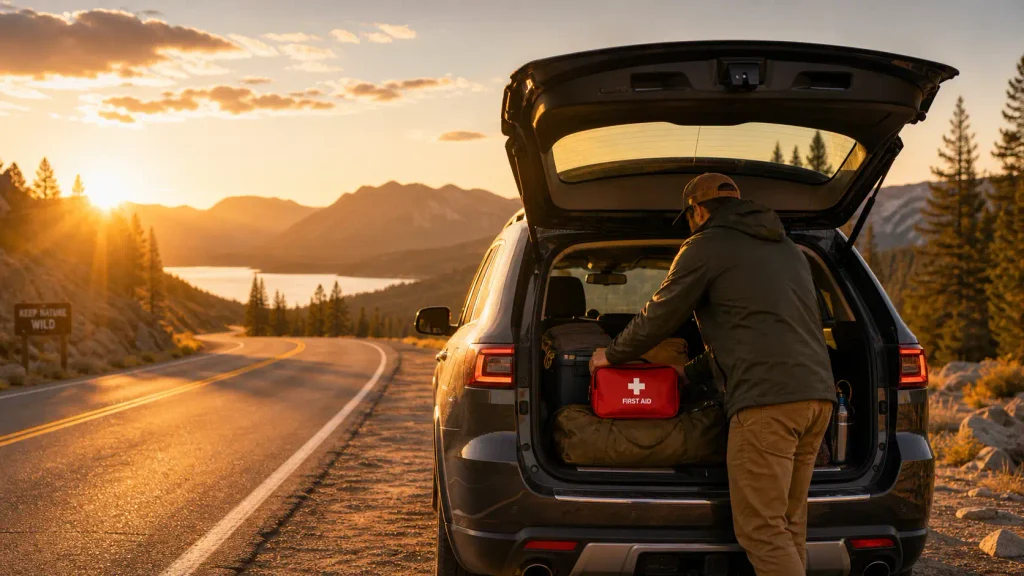
We spend an average of 300 hours a year in our vehicles. Between the daily commute and holiday road trips, our cars are essentially our second homes.
But if an emergency happens, exactly what size first aid kit for car travel do you actually need?
When I ask friends what medical gear they keep in their vehicles, the answers are terrifying. I usually hear “a handful of stale drive-thru napkins.
I usually hear “a handful of stale drive-thru napkins.” Sometimes, it’s just “a single, questionable bandage at the bottom of the center console.”
September is officially recognized by FEMA as National Preparedness Month. This is the perfect excuse to finally pay that “peace of mind tax.”
You pay monthly to insure your vehicle’s bumper and windshield against damage. It is time to insure the actual people sitting inside it.
A 100-piece kit is the absolute baseline for roadside safety.
However, your actual needs will shift dramatically depending on your family size, your commute, and your storage space.
Here is a breakdown of the top performers I tested.
The Short Version: What Made the Cut
- The Compact Baseline: The Protect Life 100-Piece First Aid Kit is a squishy, soft-shell case. It is designed purely to save space and cram into tight door crevices.
- The High-Capacity Upgrade: The Be Smart Get Prepared 201 Piece First Aid Kit uses a rigid plastic shell. It offers double the supplies without getting crushed by heavy cargo.
- The Rural Commuter’s Choice: The Everlit 250 Piece Survival First Aid Kit bridges the gap. It combines basic medical supplies with hardcore highway survival gear.
Quick Comparison
| The Top Picks | Best Used For... | Current Availability |
|---|---|---|
| Protect Life 100-Piece | Shoving into narrow car door panels | View on Amazon |
| Be Smart 201-Piece | Cluttered trunks and large families | View on Amazon |
| Everlit 250-Piece | Late-night breakdowns and off-roading | View on Amazon |
1. Testing the Protect Life 100-Piece First Aid Kit in Tight Spaces
If you drive a compact sedan or a modern EV, you know cabin storage is shrinking.
The physical shape of your medical bag matters just as much as what is actually inside it.
This kit completely solves the spatial geometry nightmare of modern car organization. It hits that essential 100-piece baseline without hogging your passenger legroom.
It is encased in a flexible, lightweight soft EVA shell. During my testing, I found this flexibility to be its biggest selling point.
You can squeeze, mold, and shove it into the passenger door cubby. It also slides perfectly underneath the driver’s seat.
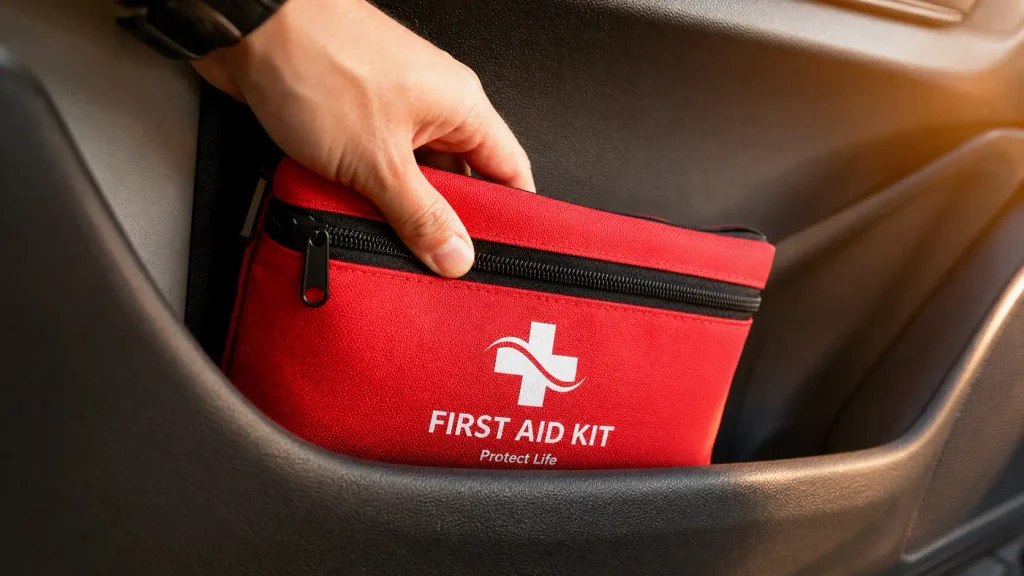
The internal organization is surprisingly thoughtful for such a tiny footprint.
Clear plastic sleeves keep the alcohol prep pads separate from the larger gauze rolls. You aren’t digging blindly when you need a quick bandage for a scraped knee at the park.
There is a slight trade-off for this space-saving design, though.
Because it crams exactly 100 pieces into the size of a thick paperback novel, repacking it is essentially a game of Tetris.
Once you pull out the larger items, getting the zipper perfectly closed again takes a few extra seconds of rearranging.
It also demands a safe pocket in your cabin where it won’t get accidentally crushed by heavy boots.
👉 Check Current Price & Deals for Protect Life 100-Piece on Amazon
2. Upgrading for the Family: The Be Smart Get Prepared 201 Piece First Aid Kit
If you have kids who are constantly getting turf burns at soccer practice, 100 pieces simply won’t last you through the year.
The same goes if you drive a work truck with a chaotic bed. You need more capacity and robust structural armor.
This kit is built like an absolute tank. It instantly doubles your medical supply line in one go.
Unlike the Protect Life kit, this one ignores flexibility entirely. It favors rigid, OSHA-compliant protection.
The high-density plastic shell and sliding snap latches are incredibly durable.
To test it, I threw it into the deep trunk of my SUV for a week.
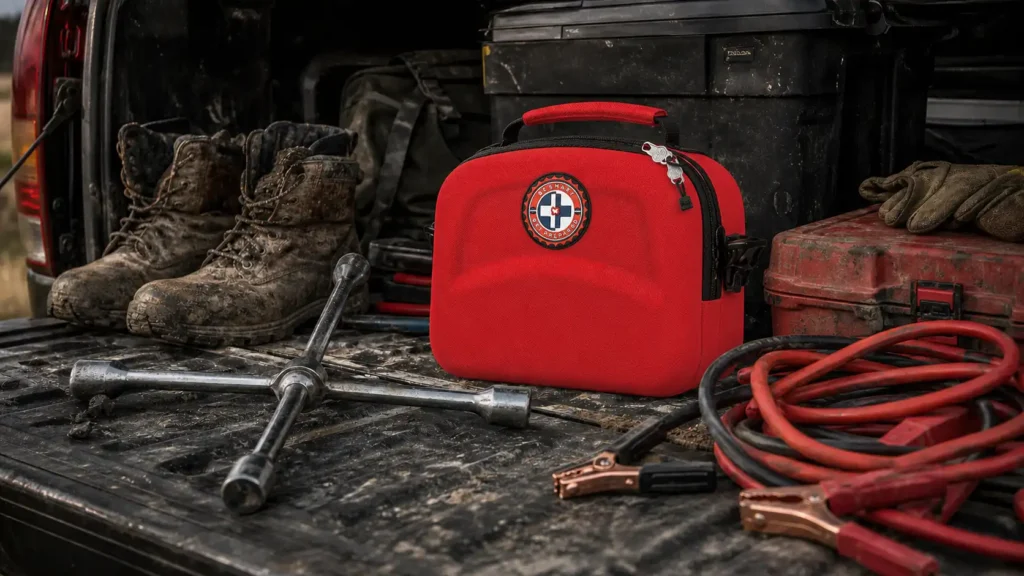
It sat right alongside loose jumper cables, a heavy metal tire iron, and a rolling floor jack.
The hard plastic case took a few cosmetic scratches as things shifted during hard braking.
However, the contents inside remained perfectly intact. The fragile instant cold compresses and adhesive bandages weren’t squashed at all.
The internal compartments are multi-tiered. Everything stays in its designated slot even if the box flips completely upside down in transit.
Just keep in mind that hard plastic vibrating against hard car plastic makes noise.
If you toss this into an empty, unlined center console, it will rattle annoyingly every time you hit a speed bump.
You really need to wedge it tightly between softer items, like a spare jacket, or just leave it securely in the trunk.
👉 Check Current Price & Deals for Be Smart 201-Piece on Amazon
3. The Heavy-Duty Route: Everlit 250 Piece Survival First Aid Kit
If your daily commute involves 45 minutes on rural backroads, a handful of sheer bandages won’t give you much comfort.
When cell service drops to a single bar, you are truly on your own.
You need something that bridges the gap between a standard boo-boo kit and an off-grid survival bag.
While it packs a massive 250 pieces, the footprint of this Everlit kit is surprisingly manageable.
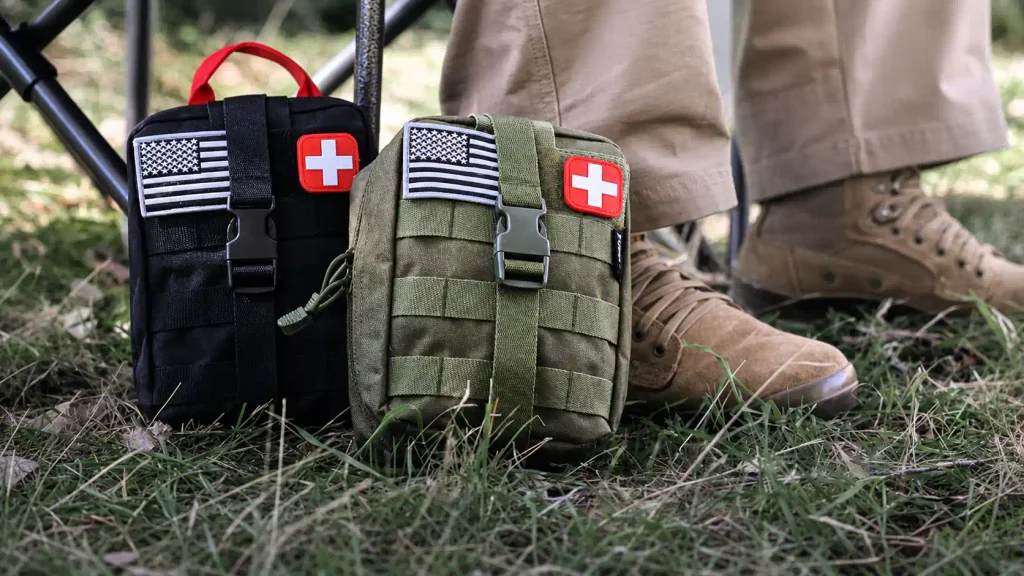
This is thanks to the military-style 600D nylon MOLLE webbing pouch.
You can even strap it to the back of a car seat headrest using the built-in loops. This keeps it completely off the floorboards and out of the way.
I was genuinely impressed by the crossover capability here.
Alongside a massive array of standard first aid supplies, I unzipped it to find real survival gear.
It includes a tactical tourniquet, a heavy-duty Israeli bandage, an emergency Mylar blanket, a tactical flashlight, and a wire saw.
During a late-night tire blowout scenario I simulated in my driveway, the flashlight and thermal blanket were game-changers.
Throwing that blanket over my shoulders while waiting for a hypothetical tow truck proved exactly why these non-medical additions are vital.
You do need to respect the gear, however.
Having a tactical tourniquet is completely useless—and potentially dangerous—if you don’t know how to apply it properly.
Buying this kit requires a commitment. You need to spend a little time watching basic trauma response videos online to truly understand your gear.
👉 Check Current Price & Deals for Everlit 250-Piece on Amazon
The Keychain Upgrade I Keep on My Rearview Mirror
Even the best vehicle trauma bag in the world has a severe blind spot.
It assumes you can safely get out of your car to treat an injury.
If your seatbelt jams after a collision, all those bandages in your trunk are utterly useless.
That’s why I keep the resqme Emergency Keychain Car Escape Tool zip-tied to my rearview mirror.
I also keep a second one attached to my daily keys.
This tiny, spring-loaded tool packs a concealed steel blade. It slices through jammed seatbelts in seconds.
It also features a spring-loaded spike that shatters tempered side windows with zero arm strength required.
I refuse to bury it in the glovebox. It must be within arm’s reach of the driver’s seat at all times.
Pairing this incredibly affordable tool with your main medical bag creates a truly complete vehicular emergency system.
👉 Check Current Price & Deals on Amazon
How to Decide What Size First Aid Kit for Car is Right for You
Matching the gear to your specific lifestyle is how you avoid buyer’s remorse.
Based on my testing, here is how I break down the decision for my readers:
- You drive a packed sedan and need the basics: Go with the Protect Life 100-Piece First Aid Kit. It handles minor headaches and scrapes, and stays out of sight in the door cubby.
- You have kids or a messy trunk: Grab the Be Smart Get Prepared 201 Piece First Aid Kit. Your family goes through bandages rapidly, and you need a hard shell that won’t get crushed by heavy gear.
- You explore off-road or drive dark highways: Upgrade to the Everlit 250 Piece Survival First Aid Kit. You frequently drive outside of reliable cell service and want the capability to wait out a cold night safely.
Common Questions I Get About Car Trauma Kits
Why do experts recommend starting with at least 100 pieces?
Starting at 100 items ensures you have redundancy for the most common injuries.
You won’t need to completely restock the entire bag after a single use.
According to the American Red Cross safety guidelines, a well-stocked supply line prevents minor roadside cuts from becoming severe infections.
Where is the absolute best place to store the kit?
The best storage spots are under the front passenger seat, inside the door panel, or in the center console.
You should actively avoid putting it in the deep trunk.
In a rear-end collision, a trunk can crumple or jam shut. This locks you away from your supplies right when you need them. The only exception is if you are using a crush-proof hard case and have zero interior cabin room.
Will the summer heat inside my car ruin the medical supplies?
Yes, sustained high cabin temperatures will degrade adhesives and melt ointments.
Extreme heat will also eventually weaken latex or nitrile gloves, causing them to tear when you put them on.
You should visually inspect the contents of your car’s kit twice a year.
I make it a habit to check mine every time I change my clocks for Daylight Saving Time. I immediately toss anything that looks melted or expired.
Final Verdict: The Best Car First Aid Kit for Your Money
If a severe storm blew away my garage tomorrow, determining what size first aid kit for car travel to rebuy would be simple. Which setup would I spend my own money on again?
The compact 100-piece soft-shell is undeniably the most practical for daily grocery runs.
In fact, it is what currently sits permanently in the passenger door panel of my wife’s daily driver.
However, I am personally a bit of a gear nerd who values over-preparedness.
For my personal truck, I’d grab the Everlit 250 Piece Survival First Aid Kit without hesitation.
It’s slightly bulkier, yes. But having the tactical flashlight, the Mylar blanket, and the heavy trauma dressings gives me a massive level of self-reliance.
A standard plastic box of adhesive bandages just can’t match that peace of mind. It earns its permanent spot strapped behind my passenger seat.
Whatever route you choose to take, don’t let Preparedness Month slip by without taking action.
Clearing out those stale napkins and upgrading to a dedicated car medical bag is the best investment you can make for your family’s safety this season.
👉 Check Active Coupons for the Everlit Survival Kit on Amazon
Do you have a favorite road trip safety trick or a rescue tool you absolutely swear by? Drop a comment down below or tag me in your photos—and as always, safe travels out there!
Want more recommendations? Head back to our homepage to see all our 2026 everyday picks.