As an Amazon Associate, I earn from qualifying purchases. This post may contain affiliate links, meaning I get a commission if you decide to make a purchase through my links, at no cost to you.
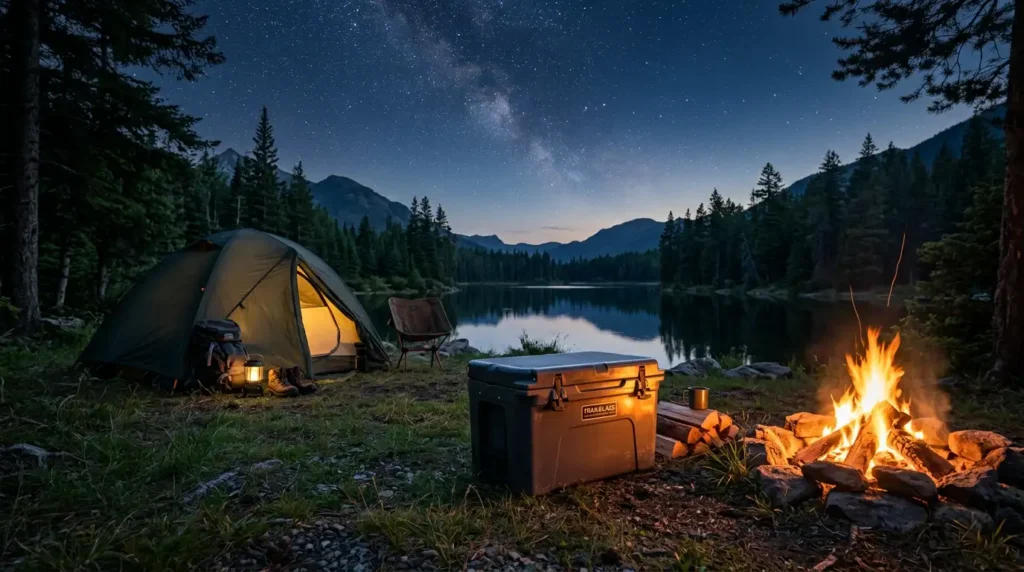
Let’s be real. There is absolutely nothing sadder than reaching into your ice chest after a long, sweaty day on the trail, expecting a crisp, freezing beer, and pulling out a lukewarm can floating in cloudy hot dog water.
We all know YETI set the gold standard for fixing this problem. But dropping a small fortune on a plastic box to hold your weekend drinks? Ouch. I’ve spent the last few summers dragging different heavy-duty ice chests across rocky campsites and tossing them into the back of my truck just to see if you really need to pay the YETI tax.
The good news? You don’t. The market has finally caught up. If you’re hunting for the best YETI cooler alternatives that deliver elite ice retention without the eye-watering premium price tag, you’re in the right place.
The Ultimate Cooler Cheat Sheet
Before we dive into the dirt and details, here is a quick breakdown of how these heavy-hitters stack up in real-world capacity, weight, and feature tiers.
| Cooler Model | Usable Capacity | Tested Ice Retention | Empty Weight | Key Standout Feature | Price Tier |
|---|---|---|---|---|---|
| YETI Tundra 45 Hard Cooler | 38 Quarts | 5–6 Days | 23 lbs | Legendary brand status & finish | $ |
| RTIC Ultra-Light 52 Quart Hard Cooler | 52 Quarts | 5–7 Days | 21 lbs | 30% lighter than standard rotomold | |
| Lifetime 55 Quart High Performance Cooler | 55 Quarts | 6–7 Days | 23.4 lbs | Certified bear-resistant (IGBC) | $ |
1. The “Save Your Lower Back” Pick: RTIC Ultra-Light 52 Quart Hard Cooler
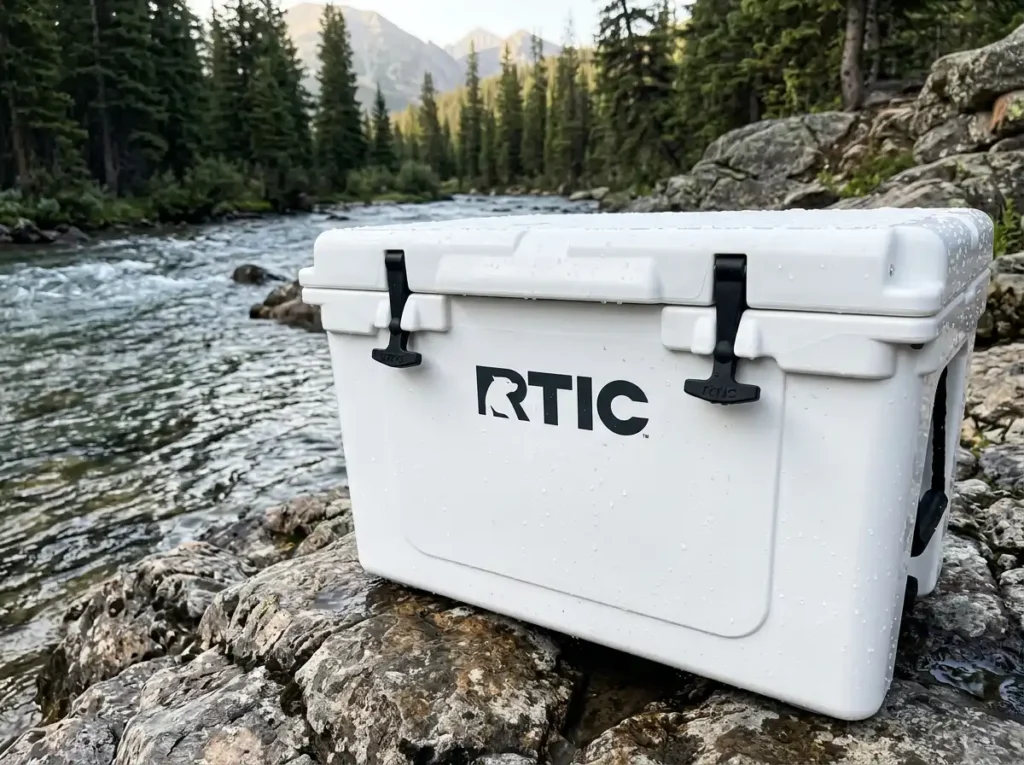
When my buddies ask me for my top recommendation among YETI cooler alternatives, I almost always point them to the RTIC Ultra-Light 52. And the main reason comes down to the dreaded “cooler shuffle.”
If you’ve ever owned a traditional rotomolded cooler, you know they are absurdly heavy—often pushing 30 pounds empty. Fully loaded with ice, steaks, and drinks, lifting it into the back of a lifted Tacoma becomes a dangerous two-person job. RTIC fixed this by ditching the traditional rotomolded process for advanced injection-molded insulation. The result is a cooler that is roughly 30% lighter than its rivals. I can actually deadlift this 52-quart beast into my trunk solo, even when it’s packed to the brim.
Tactile-wise, it doesn’t feel cheap at all. Instead of hard, finger-pinching plastic, RTIC went with these heavy-duty silicone cargo T-latches. They have a really satisfying, snappy stretch to them that seals the lid airtight without breaking your knuckles. Plus, the marine-grade rope handles don’t dig into your palms when you’re walking down to the boat dock.
Now, there is a small trade-off for shaving off that 10 pounds of dead weight. Because it uses injection molding, it is not officially certified bear-resistant. So, if you are heading deep into grizzly territory in Montana, maybe don’t leave it outside your tent smelling like bacon grease. But for 90% of us doing weekend camping or tailgating, the RTIC usually wins out simply because it saves your lower back.
👉 Check Current Price & Deals on Amazon
2. The Budget Beater: Lifetime 55 Quart High Performance Cooler
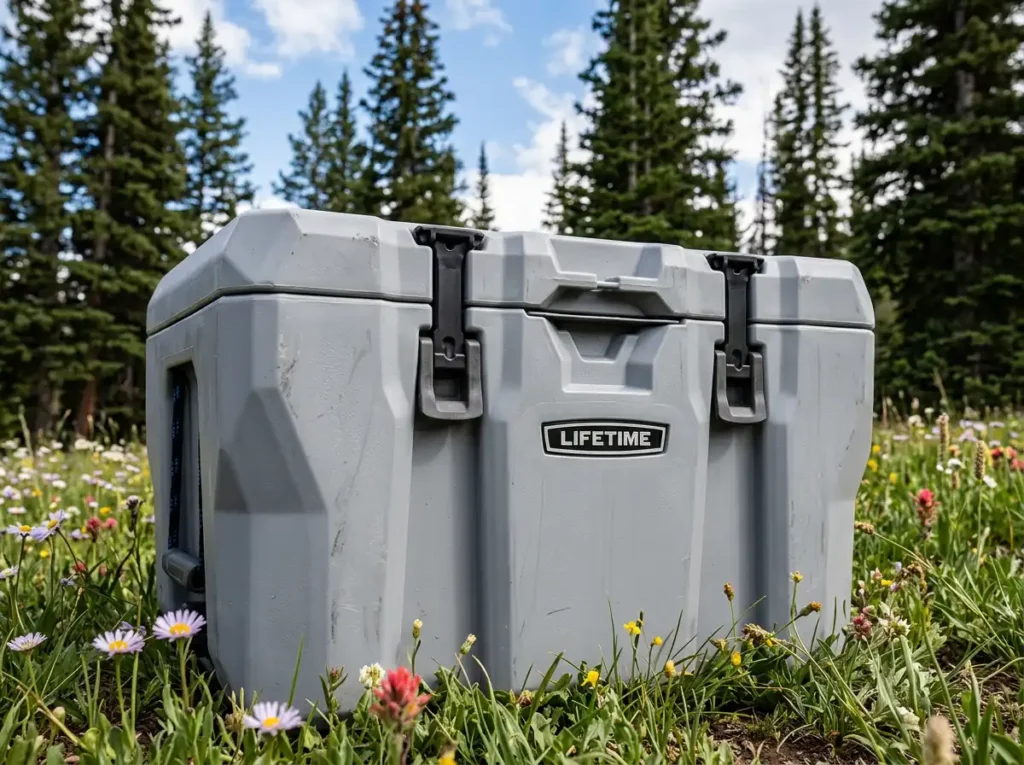
If you want a rugged ice chest that you can basically kick down a mountain, leave in the bed of your truck in the July sun, and not care if it gets scratched, the Lifetime 55 is your jam. It is the absolute definition of a budget beast, coming in at a fraction of the cost of the premium brands.
I’ve dragged this blow-molded cooler through heavy brush and strapped it to ATVs. The craziest part about this price point is that it is actually certified bear-resistant by the Interagency Grizzly Bear Committee (IGBC). If you’re camping in bear country, wilderness regulations are strict. With this cooler, you can simply run a padlock through the stainless-steel reinforced corners, leave it at your campsite, and sleep with absolute peace of mind. As for ice retention, it easily held icy slush for 5 days in my backyard summer test.
However, you do get what you pay for when it comes to the hardware. The latch system on the Lifetime is pretty quirky. Instead of a smooth rubber pull-down, it uses a rigid cam-latch that requires some serious thumb-muscle to snap shut. My wife honestly hates opening it. It definitely takes a little getting used to, but for a significantly lower entry price, I will gladly wrestle with a stiff latch to keep some serious cash in my pocket.
👉 Check Current Price & Deals on Amazon
3. The Benchmark & Reality Check: YETI Tundra 45 Hard Cooler
Wait, why is a YETI on a list of alternatives? Because we have to establish the benchmark. The YETI Tundra 45 is the cooler that started the rotomolded revolution. If you are someone who appreciates flawless fit and finish, insane long-term resale value, and yes, a bit of brand prestige at the tailgate, this is the one.
The build quality is undeniable. With its PermaFrost insulation and fat-wall design, it feels practically indestructible. When you sit on it, there is zero flex—it just feels like a tank.
But there is a major trap first-time buyers fall into: The Tundra 45 does not hold 45 quarts. Because the walls are incredibly thick to keep ice frozen for days, the actual internal, usable volume is roughly 38 quarts. It fills up much faster than you think. If you plan on packing food and drinks for a family of four for a long weekend, you’ll likely find yourself wishing you sized up or wondering why you didn’t look at a roomier competitor.
👉 Check Current Price & Deals on Amazon
The Secret Sauce: Cooler Shock High Performance Reusable Ice Packs
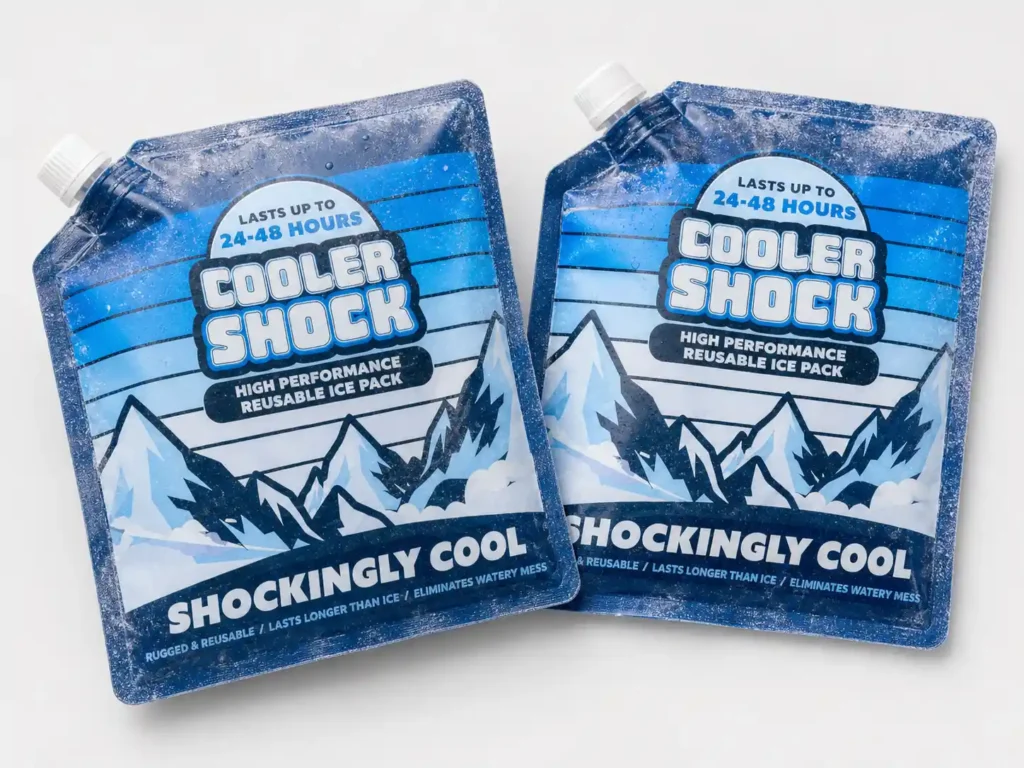
Listen to me carefully: Even the absolute best YETI cooler alternatives will fail miserably if you pack them with loose, fast-melting gas station ice. It just turns into a warm, soggy swamp that ruins your sandwich bread.
My ultimate hack for hard-sided coolers is ditching regular ice and lining the bottom with Cooler Shock High Performance Reusable Ice Packs.
These gel-filled packs are designed to freeze at 18°F (-8°C). When you pull them out of your freezer, they feel like literal bricks. By throwing these rugged, puncture-resistant packs into the bottom of your cooler, you can easily extend your ice retention by an extra 48 hours without dealing with messy puddles or wet food. They take up way less space than a standard bag of ice, leaving more room for what actually matters—your food and drinks.
👉 Check Current Price & Deals on Amazon
3 Pro-Tips: How to Actually Keep Ice Cold for Days
I don’t care if you buy a top-tier premium cooler or a basic budget option; your packing strategy makes or breaks the trip. Here is how I maximize ice retention:
- The “Sacrificial Ice” Hack: Premium coolers have incredibly thick polyurethane foam walls. If you store your cooler in a hot garage, those walls absorb heat. If you put cold food in there, the cooler will melt your ice just trying to cool its own walls down. Throw a cheap bag of gas station ice into the empty cooler the night before your trip, then dump it out the next morning before packing. It makes a massive difference.
- Respect the 2:1 Ratio: According to the USDA Food Safety and Inspection Service guidelines, keeping your perishable food below 40°F is critical to prevent foodborne illness. To maintain this, always pack your cooler using a 2:1 ratio of ice-to-contents. Two-thirds of your space should be ice or ice packs.
- The “Two Cooler” System: Whenever I go camping, I bring two coolers. One for drinks, one for raw meats and dairy. The drink cooler gets opened 50 times a day, letting hot summer air in. By keeping your food cooler locked shut until meal times, your steaks stay safe and frozen for days.
Frequently Asked Questions (The Real Talk)
Q: Are these YETI cooler alternatives actually worth it?
A: If you camp, tailgate, or road-trip more than twice a year—yes. Cheap, old-school plastic coolers use thin polystyrene panels that let heat in within hours. Rotomolded and heavy-duty blow-molded coolers use high-density foam. They are practically indestructible and will literally pay for themselves in the bags of ice you don’t have to buy.
Q: What does “bear-resistant” actually mean?
A: It means the cooler survived a live bear test. The IGBC puts the cooler in an enclosure with hungry grizzly bears who claw, bite, and jump on it for an hour. If the bear can’t break in, it gets the certification. You really only need to worry about this if you camp deep in the backcountry.
Q: How do I stop my food from getting soggy?
A: Stop using loose ice! Use the Cooler Shock packs I mentioned above. If you must use regular ice, put your food into watertight silicone bags, or utilize the dry goods basket that usually hangs near the top lip of your cooler.
So, Which YETI Cooler Alternative Deserves a Spot in Your Truck?
At the end of the day, there is no single “perfect” cooler—just the one that fits your camping style and your budget.
- Go with the RTIC Ultra-Light 52 if you want massive capacity but usually load your gear by yourself. It’s light, the latches feel amazing, and it’s the absolute best all-around value for weekend trips.
- Go with the Lifetime 55 High Performance if you want a reliable workhorse, plan to beat the hell out of your gear, and need true bear-proof certification without spending a fortune. Just be prepared to thumb-wrestle those stiff latches.
- Go with the YETI Tundra 45 if you want the classic status symbol, flawless build quality, and don’t mind the slightly smaller interior capacity.
Whichever route you choose, remember to pre-chill the cooler, use block ice or ice packs, and get out there.
Want more gear recommendations? Head back to our homepage to see all our 2026 tech comparisons.